

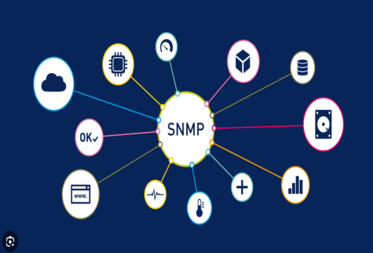
SNMP (Simple Network Management Protocol) is a widely used protocol for managing and monitoring network devices and systems. It enables network administrators to collect information from network devices, monitor their performance, and control them remotely.
Here's an overview of SNMP and its key components:
- Management Station: The SNMP management station is a system (such as a computer or server) running SNMP management software. It's used to monitor and manage network devices.
- Managed Devices: These are the network devices being monitored and managed, such as routers, switches, servers, printers, and other network appliances. Each managed device runs SNMP agent software to communicate with the management station.
- SNMP Agents: SNMP agents are software modules running on managed devices. They collect and store management information and respond to queries from SNMP management stations.
- Management Information Base (MIB): The MIB is a hierarchical database that defines the structure and organization of the managed objects in a device. It's a collection of managed objects (variables) that represent different aspects of the device's configuration and status.
- SNMP Messages: SNMP uses a set of messages to exchange information between management stations and managed devices. These messages include GET, GETNEXT, GETBULK, SET, and TRAP.
SNMP operates over UDP (User Datagram Protocol) and typically uses port 161 for SNMP queries and port 162 for SNMP traps (notifications sent from managed devices to the management station).
SNMP Versions:
There are three main versions of SNMP:
- SNMPv1: The original version of SNMP, which provides basic functionality for managing and monitoring devices. It has limited security features and uses community strings for authentication.
- SNMPv2: An improved version of SNMPv1, which adds some enhancements such as improved error handling and support for 64-bit counters.
- SNMPv3: The most secure version of SNMP, which provides authentication, encryption, and access control features. SNMPv3 addresses the security weaknesses of SNMPv1 and SNMPv2c by adding support for user-based security models (USM) and encryption of SNMP messages.
command to check the snmp status on linux:
linux:$ snmpwalk -v2c -c snmp-community-string ip-address



Leave a comment