

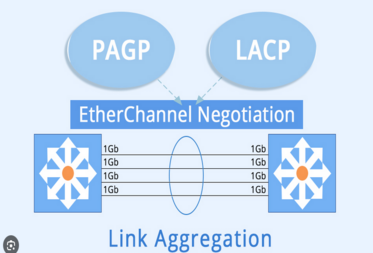
LACP (Link Aggregation Control Protocol) is a standards-based protocol used to dynamically negotiate and manage the formation of link aggregation groups (LAGs) between network devices, such as switches or routers. LACP allows devices to automatically detect and configure link aggregation without manual intervention, providing scalability, flexibility, and fault tolerance in network configurations.
Here's how LACP works and its key features:
How LACP Works:
- Negotiation: When two network devices with LACP support are connected, they negotiate the parameters of the link aggregation, such as the number of links to be aggregated and the operational mode (active or passive).
- Link Aggregation Group (LAG) Formation: Based on the negotiation, the devices form a LAG by combining multiple physical links into a single logical link.
- Dynamic Configuration: LACP dynamically manages the LAG, automatically detecting changes in the link status (such as link failures or additions) and adjusting the configuration accordingly.
- Link Monitoring: LACP continuously monitors the health and status of the member links in the LAG. If a link fails or becomes degraded, LACP can trigger a re-negotiation to reconfigure the LAG and maintain network connectivity.
LACP Modes:
- Active Mode: In active mode, a device actively initiates LACP negotiations with its peer device. It sends LACP packets to establish and maintain the LAG.
- Passive Mode: In passive mode, a device responds to LACP negotiations initiated by its peer device. It does not actively send LACP packets but will negotiate and form a LAG if requested by the peer.
Configuration Example (Cisco Catalyst Switch):
Switch(config)# interface range GigabitEthernet0/1 - 4
Switch(config-if-range)# channel-group 1 mode active
Switch(config-if-range)# exit

Switch(config)# interface Port-channel1
Switch(config-if)# switchport mode trunk
Switch(config-if)# switchport trunk allowed vlan vlan_list
Switch(config-if)# exit



Leave a comment