

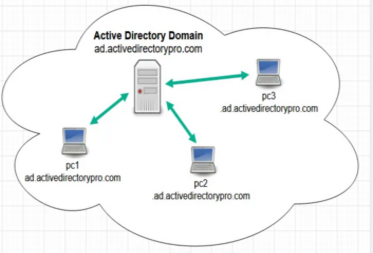
Active Directory (AD) is a directory service developed by Microsoft for Windows domain networks. It provides a centralized system for managing and organizing network resources, including users, computers, groups, printers, and other network-related objects. Active Directory plays a crucial role in authentication, authorization, and directory services within a Windows-based environment.
Key Components of Active Directory:
- Domain Services: Active Directory Domain Services (AD DS) is the core component of Active Directory, providing centralized authentication and authorization services for users and computers in a Windows domain network.
- Domain Controller (DC): A domain controller is a server running Active Directory Domain Services that authenticates users, maintains the directory database, and replicates directory changes to other domain controllers within the domain.
- Domain: A domain is a logical grouping of network objects, such as users, computers, and devices, that share a common security boundary and administrative policies. Each domain has a unique name and security identifier (SID).
- Organizational Units (OUs): Organizational units are containers within a domain that allow administrators to organize and manage objects, such as users and computers, based on organizational or administrative criteria.
- Group Policy: Group Policy is a feature of Active Directory that enables administrators to enforce and manage computer and user settings across the network. It allows for centralized configuration and control of security settings, software deployment, and system management.
- LDAP Protocol: Active Directory uses the Lightweight Directory Access Protocol (LDAP) for accessing and querying directory information. LDAP provides a standard method for applications and services to interact with Active Directory.
- Kerberos Authentication: Active Directory uses the Kerberos authentication protocol to securely authenticate users and computers within the domain. Kerberos provides mutual authentication and encryption of communication between clients and servers.
Functions of Active Directory:
- Authentication: Active Directory authenticates users and computers within the domain, allowing them to access network resources based on their permissions and security policies.
- Authorization: Active Directory enforces access control policies, determining which users and groups have permissions to access specific resources and perform specific actions.
- Directory Services: Active Directory provides a centralized directory service for storing and organizing information about network objects, such as users, groups, computers, and resources.
- Single Sign-On (SSO): Active Directory enables single sign-on authentication, allowing users to log in once with their domain credentials and access multiple network resources without needing to authenticate again.
- Centralized Management: Active Directory provides centralized management and administration of network resources, simplifying tasks such as user account management, group membership, and access control.
- Security Policies: Active Directory allows administrators to define and enforce security policies, such as password complexity requirements, account lockout policies, and security settings through Group Policy.
Overall, Active Directory is a powerful and essential component of Windows-based networks, providing a robust infrastructure for managing and securing network resources, simplifying administration, and enhancing user productivity.



Leave a comment